
In partnership with


I’m convinced Erling Haaland does one thing better than any other professional athlete, and it has nothing to do with his play on this pitch (although that’s pretty good too).
He doesn’t take himself too seriously.
As Samir Chaudry pointed out in a recent LinkedIn post, there’s an inherent juxtaposition with Haaland that has made him one of the most likable pro athletes in just a few short weeks:
It’s fun to watch the best do what appears to be the least. We’re used to the best athletes in the world taking themselves painstakingly seriously, and Erling stands out as the exception with his constant flow of lofi posts.
In today’s newsletter:
🗞 The Big Story: How Does Wimbledon Keep Its Grass Courts Alive?
📉 Biggest Loser: The Rise (and Fall) of the Single-Bar Face Mask
🏆 Winner’s Circle: Why Do Soccer Players Spit Out Their Water?
Every headline satisfies an opinion. Except ours.

Remember when the news was about what happened, not how to feel about it? 1440's Daily Digest is bringing that back. Every morning, they sift through 100+ sources to deliver a concise, unbiased briefing — no pundits, no paywalls, no politics. Just the facts, all in five minutes. For free.
🗞️ How Does Wimbledon Keep Its Grass Courts Alive?

How does Wimbledon keep its grass tennis courts alive for two weeks during a record-breaking heat wave?
Precise Planning: To answer that, we actually have to go back 10 months to last September, when a team of 31 grounds crew staff at the All England Lawn Tennis Club dry the grass and skim 12 millimeters off the top of all 18 championship courts and 20 practice courts.
Directly after the tournament ends, their goal is to “remove all weak and weed grasses,” then crews will lay 2,000 pounds of new seed and fertilizer on top of the existing courts and cover them in 6 tons of fine soil a few weeks later to ensure every playing surface is perfectly level heading into the winter.

Now, Wimbledon, which is the only tennis major to still use grass courts, grows its 100% ryegrass on top of a bed of:
Drainage pebbles
Drain pipes
Small stone
Soil
And after getting covered for the winter to maintain heat and encourage growth, come April, every court gets rolled out and sprayed with fertilizer to promote durability, root development, and that iconic green color.
But then comes arguably the most important part…
Growth Patterns: After sitting untouched all winter, the grass courts will typically grow to around 13 millimeters; for context, that’s shorter than the average length of a Super Bowl field. Still, over the next two months, the grounds crew will lower the grass height by a millimeter every two weeks until it reaches a playing height of exactly 8 millimeters, just in time for June.

via Reuters
But how do they keep the grass alive during the tournament?
Finishing Touches: Every morning, all 38 courts get mowed, rolled, and lined. There’s even a trained hawk on the grounds that patrols the courts to scare away pigeons.
Then, throughout the day, each court will be tested for soil moisture content, hardness, and chlorophyll levels to determine how much watering it needs that evening. In fact, all 38 courts are measured 24 times each day, resulting in nearly 20,000 readings to ensure consistent performance throughout the tournament.
@wimbledon Taking care of our grass 🌱
And even though by the end of this two-week stretch, most courts start to show their wear, it just makes the following year’s process all the more satisfying.
📉 The Rise (and Fall) of the Single-Bar Face Mask

Who was the last NFL player to wear a single-bar face mask?
First, let’s go back to November 15, 1953, when Hall of Fame Browns quarterback Otto Graham exited a game against the 49ers after being struck in the face by an elbow, resulting in a deep gash running down the side of his face that required 15 stitches.
See, even though facial protection had been available to football players since the 1890s, very few actually chose to wear it. In fact, like most players at the time, Graham only decided to use a plexiglass mask so he could return to that same game in the second half and help prevent further injury.
New Gear, More Safety: However, as plastic helmets began replacing leather ones throughout the 1950s, players began opting for face masks to protect against the rising rates of lost teeth, broken noses, and lacerations from being hit by a hard-shell helmet.

Otto Graham injury (left) and plexiglass facemask (right)
Cleveland’s legendary head coach at the time, Paul Brown, even had the foresight to patent a single rubber-coated steel tube in 1954 that he required all of his players to wear that season, which led to the NFL making a similar recommendation in 1955, resulting in the mass adoption of face masks by the end of the decade.
Still, there were a few holdouts, most notably former Dolphins’ kicker Garo Yepremian, who was the last player in NFL history to go without a face mask because even a single bar made him feel “claustrophobic.” That was until 1966, when Packers’ Hall of Famer Ray Nitschke hit him so hard that he felt inclined to switch the following year.
Slow Burn: The NFL would officially mandate face masks in 1962, at which point they naturally evolved beyond the single-bar style. And even though one former equipment manager says that single bars started fading out around 1986, there were still a few players who wouldn’t give them up.

Face mask bar variations throughout history.
Washington quarterback Joe Theismann was famously the last non-kicker to wear a single bar up until he retired in 1985; however, for the next 20 years, they were still worn by kickers and punters. Pro-Bowl punter Scott Player even recalls modifying his single-bar into a “convertible” by only attaching it to his helmet with one screw on each side, allowing him to create a sort of hinge so he could pull it down below his chin during a punt and swivel it back up as he ran down the field.
@nfl computa, engage maximum aura on this guy 🫡 #scottplayer #nfl
However, even though guys like Player were grandfathered into using single-bar face masks after the league officially banned them in 2004, the iconic look was retired for good after Player played his last snap in 2007 for the Browns.
Talk about a full-circle moment.
🏆 Why Do Soccer Players Spit Out Their Water?

Why are soccer players always spitting out their water?
While you might assume it’s just a quirky superstition, it’s actually a well-studied performance hack that no one seems to know about…
A Leg Up: For more than a decade, scientists have been researching how endurance athletes, like cyclists and runners, gain an edge during intense competition, and one of the first things they noticed among the top athletes was that they took big swigs of fluid and spit it right back out.
Now, their first assumption was that they did this to avoid feeling bloated, or maybe even just to alleviate a dry mouth, but the more they looked into it, the more they realized that these elite athletes were actually using a technique called “carb rinsing.”
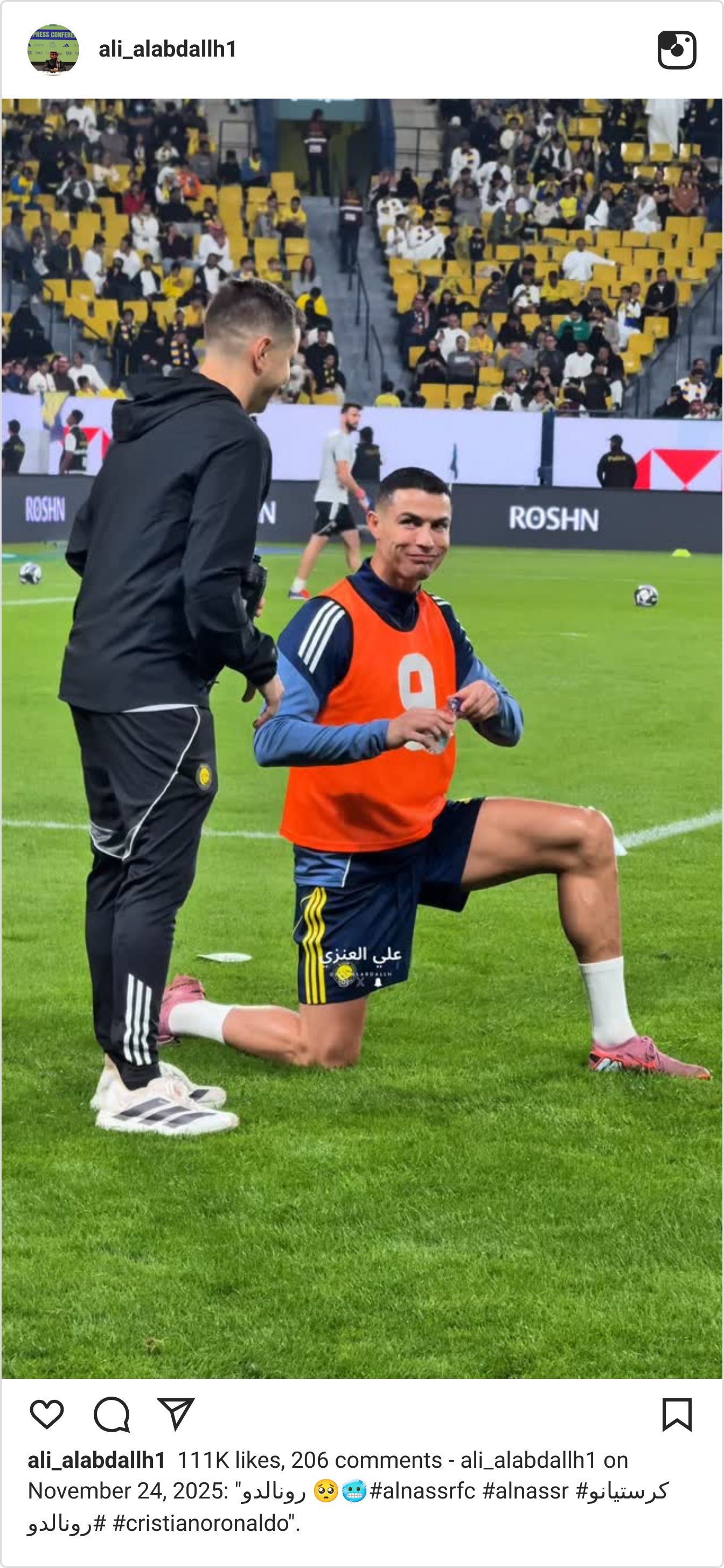
But what does that even mean?
Reward Without Risk: According to researchers, when athletes drink a carbohydrate solution, such as Gatorade or Powerade, receptors in the mouth send signals to the brain's pleasure and reward centers that more energy is on the way. And evidently, this signal alone helps your muscles push a little harder, even before they receive the extra energy.
So, scientists believe that by taking a drink of some sort of sports drink, swishing it around in your mouth for about 5-10 seconds, and then spitting it out, you can essentially get a performance boost by tricking your muscles into thinking that more energy is coming, without the feeling of heaviness, nausea or cramps that can come along with drinking a lot of fluids at once.
But does this actually work?

Proven Data: Well, according to one study, carb rinsing helped cyclists bike about a minute faster in a 25-mile (40 KM) time trial. And while pretty much every sports nutritionist and scientist agrees that soccer players still need to actually ingest fluids throughout a match, early research suggests that carb rinsing could provide a performance boost lasting about 15 minutes by counteracting fatigue and enhancing attention to the task.
And honestly, it can’t hurt to try…
⏱️ In Other News
When you refer new readers to the Bottom of the Ninth, you win exclusive prizes.

➡️ Here is your unique link to share: {{rp_refer_url}}
You’re currently at {{rp_num_referrals}}. That’s only {{rp_num_referrals_until_next_milestone}} away from receiving {{rp_next_milestone_name}}!
*Please do not use fake email addresses — they will not qualify as referrals. Thank you!
👋🏻 Happy Friday!
I mean, how can you hate this guy?
I’ll be curious to see what he says after a loss and how it compares to Captain America’s closing remarks.