
In partnership with


Do you want the good news or the bad news first?
Let’s start with the bad news: for the first time in over 30 years, the world’s largest sporting event is happening in America, and with the help of FIFA, we’ve managed to bungle it beyond belief:
$1,300 average ticket price (while 180,000 remain unsold)
80%+ of hotels say they’re underbooked
Fans (and a ref) are getting denied entry at the border
I promise there’s some good news, more on that at the end.
In today’s newsletter:
🗞 The Big Story: The Most High-Tech Grass in Sports
📉 Biggest Loser: What Happened to GoPro?
🏆 Winner’s Circle: Where do Umpire Signals Come From?
Sound familiar?

Over 4 million people have had the same lightbulb moment.
Morning Brew is a free daily newsletter that breaks down what's happening in business, finance, and tech — clearly, quickly, and with enough personality to make it the best email in your inbox.
No yelling. No filler. Just the news, finally making sense.
🗞️ The Most High-Tech Grass in Sports

The 2026 World Cup is about to feature the most high-tech grass ever created, but not for the reason you might think.
Tournament Ready: When North America was selected to host this year’s tournament all the way back in 2018, FIFA knew that one of its biggest challenges would be converting NFL stadiums into world-class soccer venues.
That’s because, unlike the NFL, FIFA requires that all of its tournaments use natural grass playing surfaces, which must undergo 25 different tests to check things like:
Ball roll
Shock absorption
Moisture levels
Root depth
Not to mention, of the 16 host venues, half typically use artificial turf fields that have to be replaced with real grass.
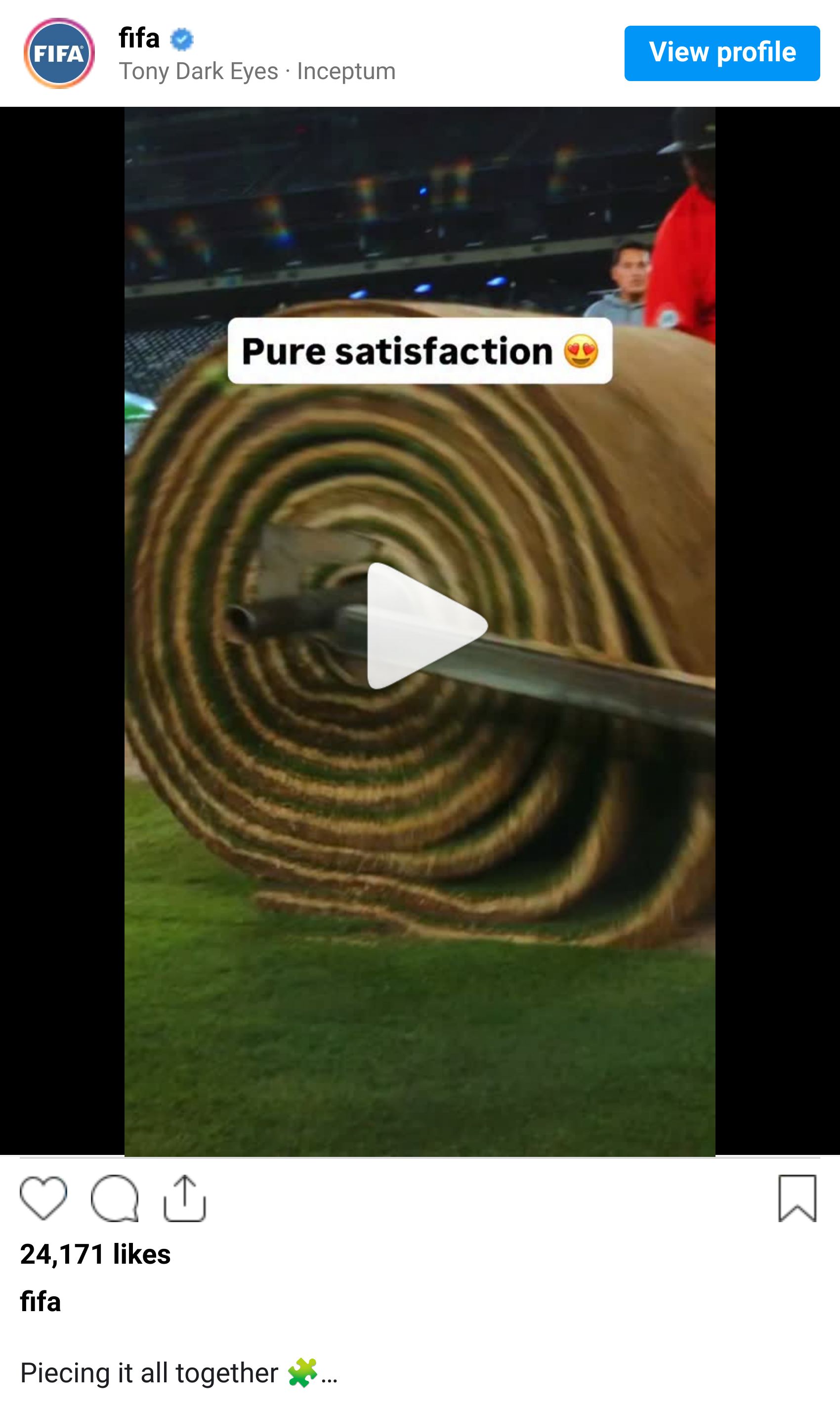
That’s why, for the past 8 years, FIFA has spent more than $5 million to work with researchers at the University of Tennessee and Michigan State to create the perfect grass for every individual host stadium, specifically the indoor ones, and the way they did it is actually really cool.
Stadium Specific: Typically, high-end natural-grass fields sit on 12 inches of sand and 4 inches of gravel to promote root growth and provide stability for players. However, Tennessee professor John Sorochan quickly realized that for the five indoor venues with artificial-turf fields, it wasn’t going to be an option.

John Sorochan and a look at the sod he has created and researched.
Instead, he and his team developed a blend of grass that they could grow on a sheet of plastic to help protect and strengthen the roots during transportation and use. Then, to help make the pitch more durable, additional plastic fibers, like those used in artificial turf, are woven beneath 5% of the playing surface to prevent massive divots from being taken out of the field.
Then, this relatively thin layer of grass is laid on top of shock pads, which allow airflow and water movement beneath the roots.
Adaptations: Now, to avoid the critiques from last year’s Copa America of the grass being too “bouncy,” FIFA has since increased the buffer between the grass and the shock pads, an effect that Sorochan and his team actually tested using a device they invented for this very tournament called the fLEX, which uses a 3D-printed foot and cleat to simulate the impact of a 168-pound soccer player.
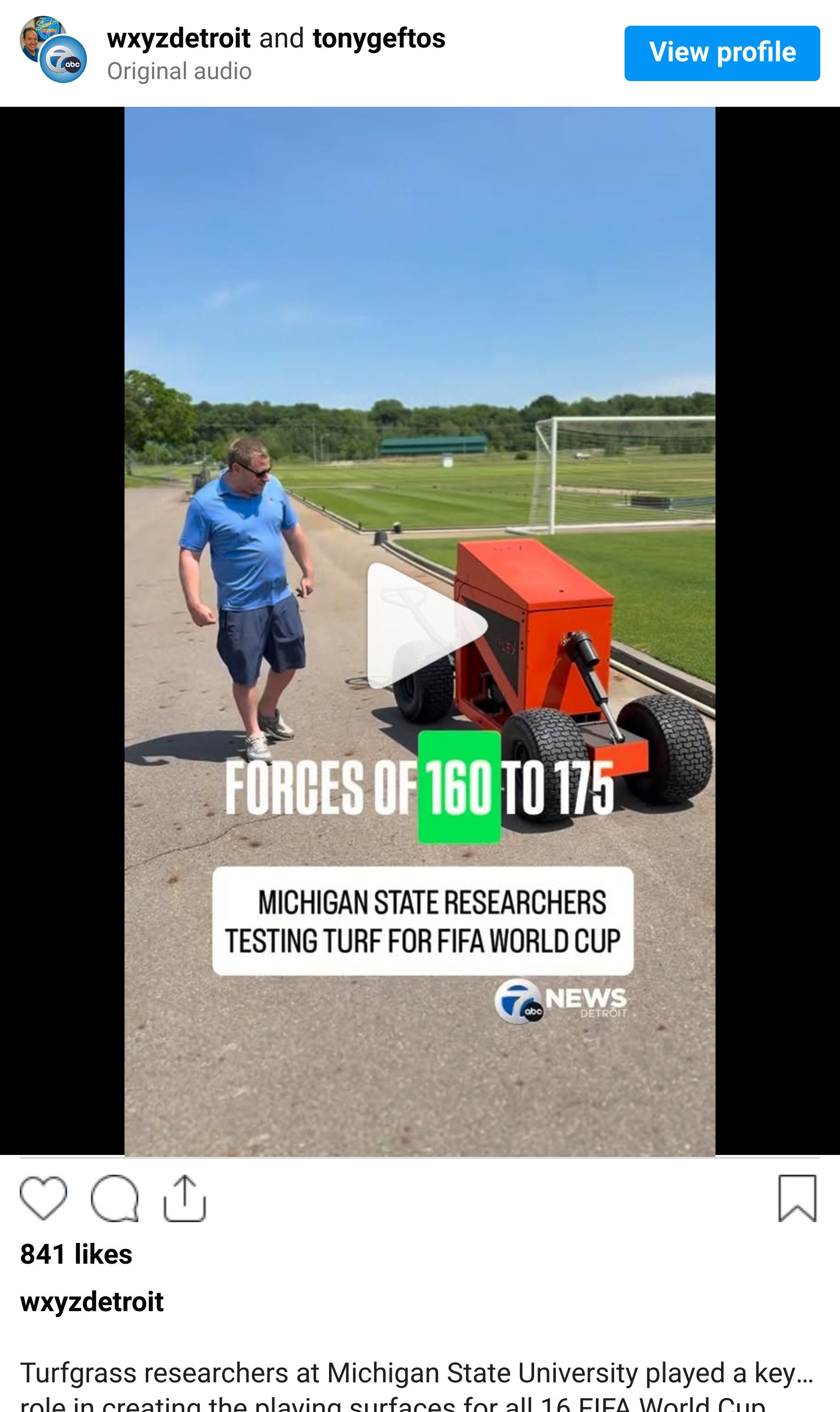
They also use this red machine to shoot soccer balls onto each turf sample to determine the ideal grass length, which is measured down to the millimeter.
Then, once the grass is fully grown on sod farms around the country, which typically takes about a year, it is cut into 4-foot strips, loaded onto a refrigerated truck, and installed at every venue across North America no later than 10 days before the start of the tournament.
Let’s just hope it works.
📉 What Happened to GoPro?

What the hell happened to GoPro?
Just 12 years ago, the company commanded 75% market share and boasted an $11 billion valuation, but now it is losing almost $100M per year.
However, the reason why isn’t actually as simple as you might think.
Reaching the Peak: In 2014, both GoPro and its founder, Nick Woodman, appeared to be unstoppable. The company had just gone public, reaching a valuation of $11 billion, and Woodman had become America’s highest-paid executive that year, with a total compensation package worth over $284.5 million.
However, even at its best, the cracks were already showing.

GoPro IPOs in 2014
Although GoPro made over $1 billion in revenue in 2014, its net profit was actually only $128M. This is because, after going public, the company spent hundreds of millions of dollars in order to:
Grow their team from 50 to over 1,500 employees
Create a full media division
Buy competing companies
Launch new products
Pivoting: The only problem was that by the time they spent all this money, it was already 2015, when tech giants like Apple and Samsung were investing billions to upgrade the cameras on their smartphones, and Chinese manufacturers were flooding the market with cheap knock-offs.

iPhone (left), GoPro (center), LUMIX S1 (right).
This caused GoPro to pivot away from serving its traditional audience of extreme action-sport enthusiasts toward a much more general, casual audience, for which it developed a product called the Hero Session 4, a highly simplified, compact camera designed to be operated with a single button.
However, instead of selling this stripped-down camera at a lower price point, GoPro, for some reason, sold it at the exact same price as its full-featured flagship product.
Off the Deep End: This, combined with a $375 million loss after acquiring a failed drone start-up and a media division that wasn’t profitable, caused GoPro’s profitability to fall off a cliff in 2015.

Hero Session 4 (left) and the Omni Rig (right)
After rounds of layoffs and more failed R&D projects, by 2018 the company’s global market share had been cut by more than half, a trend that continued into the 2020s amid improvements in smartphone technology and the rise of more innovative competitors like DJI and Insta360.
In fact, in 2024 alone, GoPro reported a net loss of $430 million, valuing the company at just $115 million, a 98% decline in just 10 years. And even though Woodman has recently vowed to cut his salary to $0, it might be a little too late for the once iconic brand.
🏆 Where do Umpire Signals Come From?

Where do umpire signals come from?
I mean, just think about it, for some reason, the sign that means “incomplete” in football signals “safe” in baseball, meanwhile, a strike is denoted with a simple point; however, a ball doesn’t even have a signal.
Luckily, there’s a great story as to why this is.
Early Struggles: Even though professional baseball has been around since 1869, for the first 41 years of the sport, umpires simply made calls with their voices.
Naturally, this posed a few problems. For starters, as the sport grew more popular, it became increasingly hard for fans in the stands and even players on the field to hear every single call clearly. Not to mention, there were several reported instances of umpires losing their voice during a game, leading to the rise of hand signals in the early 1900s.
But how did they settle on which signal meant what? Well, the short answer is they didn’t.

Dummy Hoy
Game Changer: See, even though some umpires like to take credit for “inventing” the hand signals we use today, most baseball historians agree that it’s actually a player named Dummy Hoy who was responsible for helping hand signals become mainstream.
Hoy was nicknamed “Dummy” because he was born deaf, and still played 15 seasons of professional baseball. However, since every umpire at the time would only relay their ball-and-strike calls verbally, Hoy never knew the count, which led him to struggle at the plate in the minor leagues, hitting just .219 in 1885.
However, that all changed when he developed a system in 1887 with his third-base coach, who would signal Hoy with his right index finger for a strike and his left for a ball, resulting in his batting average jumping to .367 and propelling him to the Majors.
Language of Signals: In fact, a lot of the baseball signals that we know today can actually be traced back to sign language. For example, the signal for “out” is nearly identical to the ASL sign for “out,” while the signal for “safe” resembles the ASL sign for “free.”

Out in ASL (left) vs. Out in baseball (right)
Hoy would go on to retire in 1902; however, just 6 years later, every umpire would be required to use hand signals along with their verbal calls, with most of the signs coming directly from the ones deaf players like Hoy had already been using for decades to better understand the game.
I guess “Dummy” might have been a bit of an unfair nickname.
⏱️ In Other News
When you refer new readers to the Bottom of the Ninth, you win exclusive prizes.

➡️ Here is your unique link to share: {{rp_refer_url}}
You’re currently at {{rp_num_referrals}}. That’s only {{rp_num_referrals_until_next_milestone}} away from receiving {{rp_next_milestone_name}}!
*Please do not use fake email addresses — they will not qualify as referrals. Thank you!
👋🏻 Happy Friday!
Ok, here’s the good news.
Seeing all of these non-American fans experience our country for the first time has been wildly entertaining. My current favorite is @FreddyLA7 on Twitter, who is a German fan cataloging his experiences eating at some of our nation’s finest establishments.
In all seriousness, I’m hopeful that fans coming from around the globe realize that America is more than the bluster they might see on the news. It’s actually a beautiful country, filled with interesting pockets of culture and very gracious people if you look for it.