
In partnership with


A story broke this week about EA potentially canceling its wildly popular College Football series within the next five years. I have a video coming out about it this weekend, but I dug into the facts, and one in particular really surprised me. More on that at the end.
In today’s newsletter:
🗞 The Big Story: What’s Going On With The Philadelphia Eagles?
📉 Biggest Loser: What Happened To That Glass Basketball Court?
🏆 Winner’s Circle: Why Do We Call First-Year Athletes “Rookies”?

The best marketing ideas come from marketers who live it.
That’s what this newsletter delivers.
The Marketing Millennials is a look inside what’s working right now for other marketers. No theory. No fluff. Just real insights and ideas you can actually use—from marketers who’ve been there, done that, and are sharing the playbook.
Every newsletter is written by Daniel Murray, a marketer obsessed with what goes into great marketing. Expect fresh takes, hot topics, and the kind of stuff you’ll want to steal for your next campaign.
Because marketing shouldn’t feel like guesswork. And you shouldn’t have to dig for the good stuff.
🗞️ What’s Going On With The Philadelphia Eagles?

What the heck is going on with the Philadelphia Eagles right now?
Even though one of their best players just announced his retirement in the middle of the season, they’ve decided to keep him on their active roster and play the rest of the year with one fewer player than everyone else.
However, the reason is actually more complicated than you might think.
Breaking News: After abruptly announcing his retirement right after the Eagles’ Week 4 game against the Rams, fans were confused to see offensive lineman Lane Johnson still listed on the team’s active roster the following week.
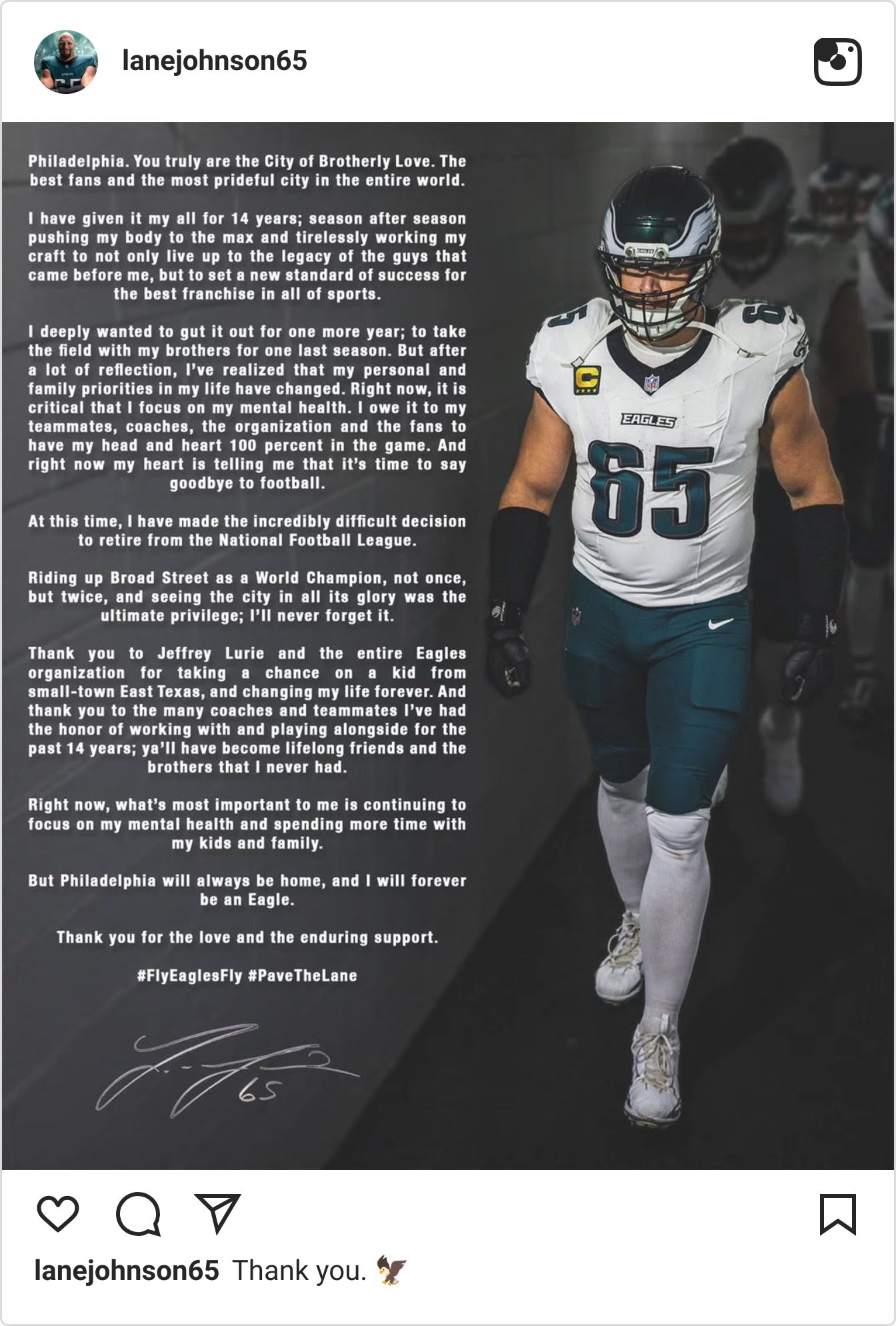
Typically, when a player retires, his team moves him to the “Reserved/Retired List,” which opens a roster spot to sign a replacement, but the Eagles didn’t.
Instead, they’re opting to play the rest of the season with one fewer player, but there’s a good reason.
The Plan: The Eagles are notorious for adding what are called “void years” to a player’s contract. This means that instead of counting Lane Johnson’s full compensation against the cap while he’s on the team, the Eagles spread it out over the next 5 years, long after they knew he’d be off the team.

Now, this strategy works well when a guy plays out his full contract, but if a team cuts him or he retires, all that spread-out money comes due at the start of the following season.
Which means, in Lane’s case, up to $19 million would have been counted against the Eagles’ cap this year, with up to $43 million counted against the cap next year, even though he’d no longer be on the team.

That’s why, instead of officially moving him to the “retired” list, the Eagles have opted to technically keep him on their roster until June 2nd, 2027, at which point they can split that money across the next two seasons, minimizing the cap hit they’ll face next year.
📉 What Happened To That Glass Basketball Court?

What ever happened to that glass basketball court company?
Remember, the one that the Big 12 had to ditch earlier this year in the middle of their conference tournament after players complained the court was “too slippery” and “distracting.”
Well, it turns out they’re not only still around, but they’ll actually be installing a court for an NBA team as soon as 2027; let me explain.
Risk-Reward: In hindsight, debuting a glass, LED basketball court in a high-stakes, high-profile college basketball tournament probably wasn’t the best idea. However, even though there weren’t any serious injuries or unexpected bounces, it didn’t take long for the internet to turn against the experimental new court due, in large part, to feedback from players and coaches who noted the “slippery nature of the surface” and how “bright and flashing lights created some dizziness or headaches.”
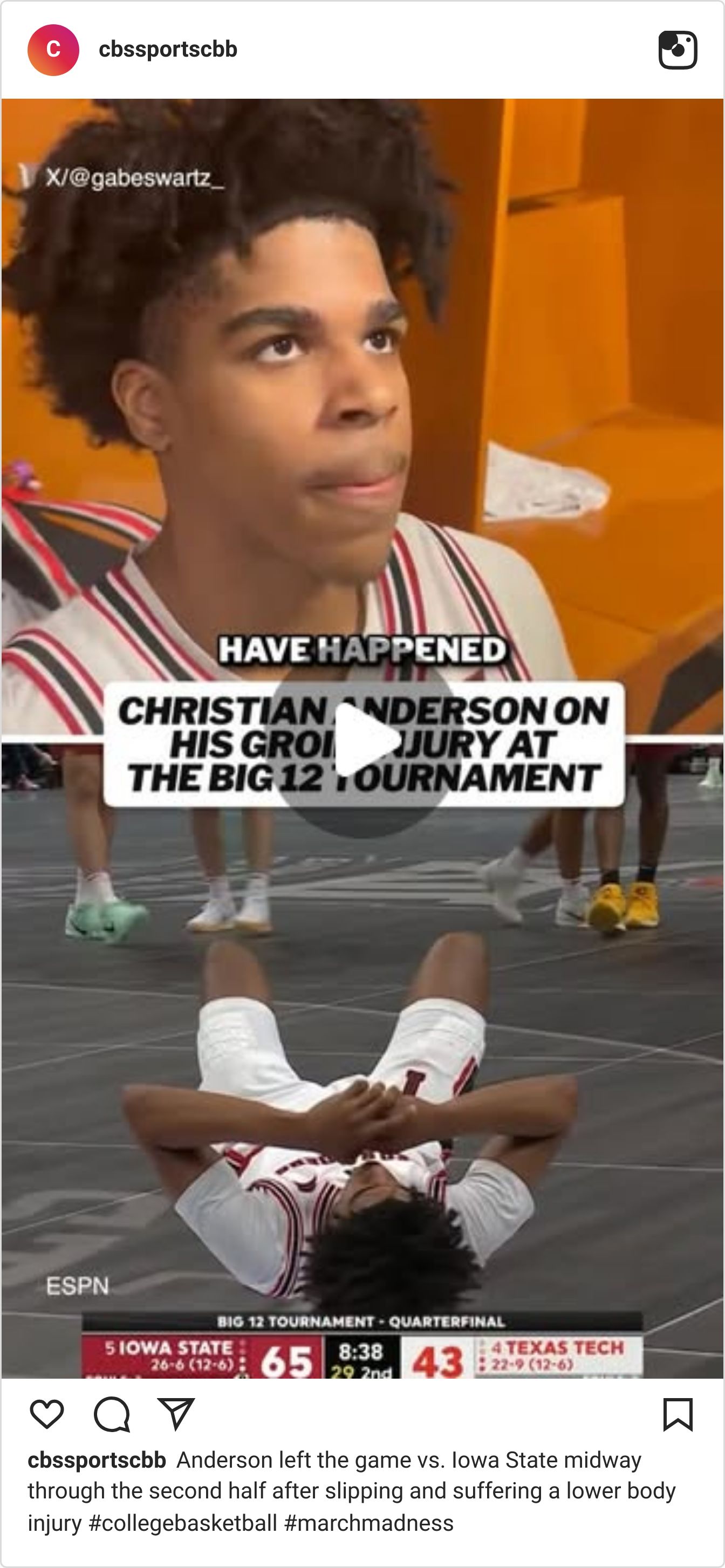
This led the Big 12 Commissioner to change the court back to hardwood with just two games left in the conference tournament, a decision the court’s creators, ASB GlassFloor, said they “understood.”
Court Analysis: Now, in a post-event examination of the glass court, an engineering firm determined that the glass’ dimples, which are supposed to help sneakers adhere to the floor like normal wood, were actually 6% less grippy than the company’s other floors.

Glass dimples (left) EuroLeague Glass Floor (right)
This review has led ASB to raise its manufacturing standards across other clients, like those seen in EuroLeague basketball.
But ASB isn’t done trying to go mainstream here in America, too. In fact, glass courts will actually be used in some college basketball preseason tournaments this season, and the Cleveland Cavaliers will have one of their own installed in their new practice facility that opens next year.
And honestly, since the NBA is a minority investor in the company, I don’t think this is the last we’ll see of glass, LED basketball courts in elite-level competition.
🏆 Why Do We Call First-Year Athletes “Rookies”?

Tetairoa McMillan NFL 2025 ROTY (left) Nick Kurtz MLB 2025 ROTY (right).
Why do we call first-year athletes “rookies?”
The short answer is the Civil War, but the real answer is a lot more complicated.
Potential Derivatives: It’s worth noting that historians still don’t really agree on when or where the term “rookie” officially originated. Some suggest it comes from chess, since the piece called the “rook” is often the last to be used when a game starts. Meanwhile, others link it to the old slang term “rook,” which meant “to cheat,” and may have been applied to people thought to be easily cheated by con men.
However, the most popular theory is that it evolved from the word “recruit” sometime between the Civil War and World War I.
But how do you get “rookie” from “recruit?”
In The Trenches: One report published in the Literary Digest in 1917 suggests the origin can be traced to the term “rookery,” military slang for the least desirable barracks, typically given to newbies. However, another report suggests that the word originated from a different Civil War-era slang term for new recruits called “reckies,” which eventually evolved into “rookies.”

“Rookery”
Still, regardless of where it came from, it didn’t take long for the term, which was first published in 1882 in a British army song, to make its appearance in a sports context, when the Washington Post used it to describe the newest players on an MLB roster back in 1908, even going so far as to compare them to being as lonely as “the strawberry on the roof of the shortcake.”
All of the most interesting stories in sports really just do lead back to baseball…
⏱️ In Other News
When you refer new readers to the Bottom of the Ninth, you win exclusive prizes.

➡️ Here is your unique link to share: {{rp_refer_url}}
You’re currently at {{rp_num_referrals}}. That’s only {{rp_num_referrals_until_next_milestone}} away from receiving {{rp_next_milestone_name}}!
*Please do not use fake email addresses — they will not qualify as referrals. Thank you!
👋🏻 Happy Friday!
I want you to watch my video on this EA Sports controversy this weekend, but let’s play a little game. If the video game studio is spending an estimated $20 million to license the name, image, and likeness of ~11,000 college football players ($1,500/player), what are they paying NFL players?
The answer: $320 million per year.
You’re telling me the math works on Madden but not College Football? I’m starting to think this is about more than just paying players…